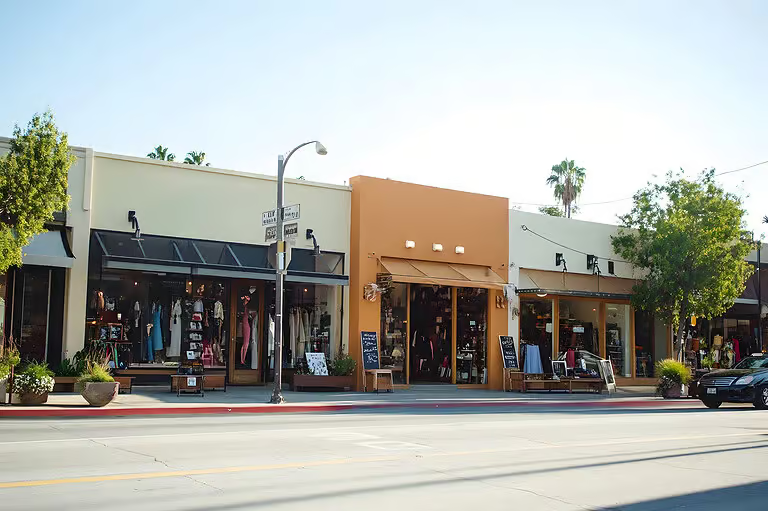


A converted grocery store on Congress Street now holds one of Portland’s best-known vintage marketplaces. Portland Flea-for-All occupies 585 Congress Street in the city’s Arts District, a building that spent roughly four decades as Paul’s Food Center before the market moved in during 2016, bringing a rotating collection of vintage and antique goods to a location closer to the heart of downtown than its original home. The market got its start in 2012, founded by Erin Kiley and Nathaniel Baldwin, who set out to build shared retail space where independent sellers could reach steady foot traffic and present their goods in a professional setting rather than relying only on weekend flea markets or online listings.
Spread across roughly 10,000 square feet, the market now hosts something on the order of 100 vendors and consignors at a time, each contributing to a floor that shifts constantly as pieces sell and new stock arrives. On any given weekend, shoppers might find sterling silver serving pieces and oil lamps, estate jewelry including emerald and diamond rings, Victorian leaded glass windows and coin purses, mid-century dining sets, and stacks of vinyl records, all within the same walk through the building. That range is part of the draw: rather than specializing narrowly the way a single-dealer antique shop might, Portland Flea-for-All functions more like an indoor market hall, where a hundred different sensibilities and specialties sit side by side under one roof.
The market keeps a compact, weekend-focused schedule, open Friday and Saturday from 10 a.m. to 6 p.m. and Sunday from noon to 4 p.m., a rhythm suited to a business built around browsing and treasure hunting rather than daily errands. That schedule, combined with the sheer number of vendors, means the inventory can look meaningfully different from one weekend to the next, and regulars often treat a Saturday stop as a standing ritual rather than an occasional outing. The Arts District location puts the market within easy walking distance of Portland’s galleries, restaurants, and the Maine College of Art and Design, making it a natural stop for anyone already spending a weekend exploring that stretch of Congress Street.
What sets Portland Flea-for-All apart from a typical antique mall is its origin as a deliberate answer to a gap in how independent vintage sellers reached customers. Kiley and Baldwin built the market specifically to give sellers who lacked their own storefronts a consistent, well-trafficked place to sell, taking on the overhead of a shared retail space so individual vendors and consignors would not have to. That model has held steady through the market’s 2016 move from its original Bayside location on Kennebec Street, near the city’s public works yards, to its current, more central spot in the Arts District, a relocation the founders had reportedly wanted from early on in order to be closer to downtown foot traffic.
For collectors, the market rewards patience and repeat visits, since a hundred vendors restocking on their own schedules means timing matters as much as browsing skill. First-time visitors are often surprised by how much ground the space covers in a single building, from small display cases of jewelry to full room groupings of furniture. Sellers interested in consigning are directed to contact the market directly rather than simply showing up with goods, reflecting the curated, application-based approach that keeps the mix of merchandise consistent even as vendors rotate. Portland Flea-for-All is a multi-vendor vintage and antique market in Portland’s Arts District, known for housing around 100 independent sellers inside a converted 10,000-square-foot former grocery store on Congress Street.