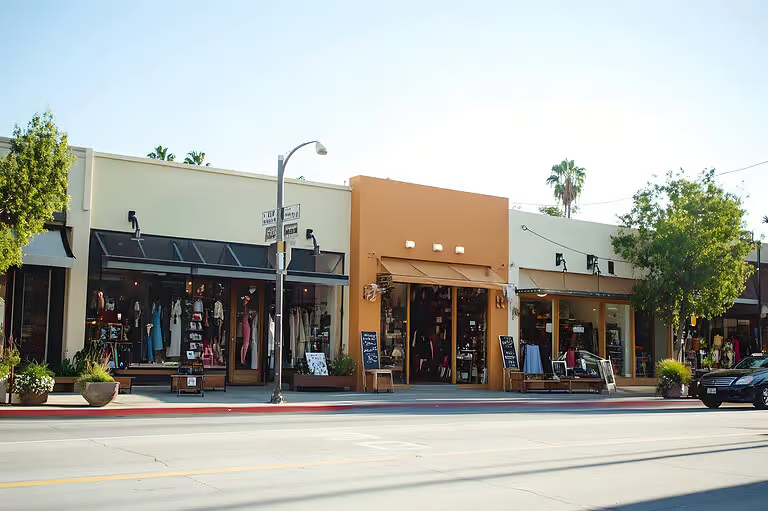


Three generations of one family have spent their working lives around antique collecting, estate auctions, and secondhand sales, and that lineage is what shoppers walk into at The Milford Market Antiques on Clinton Street in downtown Milford, New Hampshire. Set inside a refurbished historic mill building, the market spreads across two floors and gathers roughly seventy-five independent dealers under one roof, each with a distinct eye and specialty rather than a single curated inventory imposed from above. That structure means a visitor can move from a booth of primitive farmhouse tools to a case of estate jewelry to a corner of mid-century glassware within a few steps, encountering the kind of variety that only comes from dozens of individual collectors stocking their own space.
Milford sits along the Souhegan River in Hillsborough County, a town built around a granite quarrying and mill economy in the nineteenth century whose brick industrial buildings now house shops, restaurants, and small businesses instead of factory floors. The market’s home inside one of those old mill structures ties the shopping experience directly to the town’s history, giving visitors a sense of place that a generic strip-mall antique store cannot match. The location draws both regular Hillsborough County pickers who know to check back often as dealer booths turn over, and out-of-town visitors making a day trip along New Hampshire’s well-traveled antiquing circuit that runs through towns like Milford, Wilton, and Peterborough.
What sets the shop apart is less any single item and more the family stewardship behind the whole operation. Running a multi-dealer antique market is different from running a single-owner shop; it requires managing relationships with dozens of independent vendors, coordinating what comes in and out, and maintaining consistent hours and cleanliness across a space that others are constantly restocking. A business that has kept that going across three generations has effectively built an institution rather than a single storefront, one where dealers themselves often become fixtures that regular customers come to recognize by name or by the specific corner of the market they occupy.
The Milford Market Antiques keeps a schedule geared toward dedicated treasure hunters. The shop is open Tuesday through Saturday from 10 a.m. to 5 p.m. and Sunday from 10 a.m. to 4 p.m., closing only on Mondays, giving shoppers six days a week to browse two full floors of primitives, furniture, glassware, jewelry, tools, textiles, and the countless small collectibles that define a well-stocked New England antique mall. Because inventory belongs to so many separate dealers rather than a single buyer, stock turns over constantly and unpredictably, rewarding shoppers who make the market a repeat stop rather than a once-a-year visit.
For collectors and casual browsers alike, the appeal of a multi-dealer market like this one is the density of choice packed into a single visit, letting a shopper compare a dozen different dealers’ takes on similar categories of goods without driving between separate stores. The Milford Market Antiques channels that appeal through a family-run operation with deep roots in the trade, housed in a piece of Milford’s own industrial history. Anyone searching for antiques, vintage decor, or genuine New Hampshire mill-town character will find The Milford Market Antiques a reliable, ever-changing stop worth returning to season after season.