


101 Trouvailles operates in Rouyn-Noranda, the Abitibi-Temiscamingue mining city in northwestern Quebec, as part of a two-sided community organization that pairs a resale storefront with a materials recovery mandate for the city itself. The shop and its partner operation, known locally as La REssourcerie, run under the tagline On REdonne vie, ensemble, or roughly we give life back, together, a phrase that sums up both halves of the work: a food bank that collects and redistributes groceries to households facing food insecurity, and a retail side that sells clothing, textiles, household goods, furniture, dishes, toys, and small appliances that would otherwise end up discarded. Shoppers browsing the sales floor find the kind of rotating, donation-driven inventory typical of a community reuse shop, priced to move quickly and refreshed constantly as residents drop off items they no longer need. What separates this operation from an ordinary secondhand store is its formal role running the Ecocentre Arthur-Gagnon on behalf of the City of Rouyn-Noranda, a materials recovery facility where textiles get sorted by quality, damaged clothing gets converted into industrial rags rather than sent to landfill, and metals, cardboard, paper, and electronics are pulled out for proper recycling streams. That municipal partnership means the shop functions as a genuine piece of the city’s waste diversion infrastructure rather than operating purely as retail, a distinction that matters in a resource-industry region where sustainable material handling carries real local weight. Before items reach the sales floor, the organization runs quality verification checks to confirm that donated goods, particularly small appliances and electronics, actually function, sparing shoppers the guesswork that can come with buying secondhand electrics elsewhere. The two connected entities, 101 Trouvailles and La REssourcerie, work in tandem, meaning a single donation drop-off in Rouyn-Noranda can end up feeding either the retail floor, the recycling stream, or the food bank’s shelves depending on what it is and what condition it arrives in. All monetary donations made to the organization are directed specifically toward the food bank side of the operation, keeping that emergency-relief function separately funded from the resale and recycling work even though the two operate under one roof and one mission. For a city built around mining and resource extraction, having a local organization that treats textile waste, damaged furniture, and unused household goods as recoverable resources rather than trash fits naturally into the region’s broader relationship with material recovery, just applied to household goods instead of ore. The organization describes its broader goal as offering dignity, hope, and comfort alongside the material goods it distributes and sells, framing the retail floor as one entry point into a wider safety net for Rouyn-Noranda households rather than a stand-alone shop. Anyone in the Abitibi-Temiscamingue region looking to donate used clothing, furniture, or small appliances, or simply to shop for affordable secondhand household goods while supporting local food security and municipal recycling efforts, will find both functions handled under this one Rouyn-Noranda operation. In short, 101 Trouvailles is a Rouyn-Noranda resale and materials recovery operation that sells donated clothing, furniture, and household goods while running the city’s Ecocentre Arthur-Gagnon and funding a local food bank.

101 Trouvailles operates in Rouyn-Noranda, the Abitibi-Temiscamingue mining city in northwestern Quebec, as part of a two-sided community organization that pairs a resale storefront with a materials recovery mandate for the city itself. The shop and its partner operation, known locally as La REssourcerie, run under the tagline On REdonne vie, ensemble, or roughly we give life back, together, a phrase that sums up both halves of the work: a food bank that collects and redistributes groceries to households facing food insecurity, and a retail side that sells clothing, textiles, household goods, furniture, dishes, toys, and small appliances that would otherwise end up discarded. Shoppers browsing the sales floor find the kind of rotating, donation-driven inventory typical of a community reuse shop, priced to move quickly and refreshed constantly as residents drop off items they no longer need. What separates this operation from an ordinary secondhand store is its formal role running the Ecocentre Arthur-Gagnon on behalf of the City of Rouyn-Noranda, a materials recovery facility where textiles get sorted by quality, damaged clothing gets converted into industrial rags rather than sent to landfill, and metals, cardboard, paper, and electronics are pulled out for proper recycling streams. That municipal partnership means the shop functions as a genuine piece of the city’s waste diversion infrastructure rather than operating purely as retail, a distinction that matters in a resource-industry region where sustainable material handling carries real local weight. Before items reach the sales floor, the organization runs quality verification checks to confirm that donated goods, particularly small appliances and electronics, actually function, sparing shoppers the guesswork that can come with buying secondhand electrics elsewhere. The two connected entities, 101 Trouvailles and La REssourcerie, work in tandem, meaning a single donation drop-off in Rouyn-Noranda can end up feeding either the retail floor, the recycling stream, or the food bank’s shelves depending on what it is and what condition it arrives in. All monetary donations made to the organization are directed specifically toward the food bank side of the operation, keeping that emergency-relief function separately funded from the resale and recycling work even though the two operate under one roof and one mission. For a city built around mining and resource extraction, having a local organization that treats textile waste, damaged furniture, and unused household goods as recoverable resources rather than trash fits naturally into the region’s broader relationship with material recovery, just applied to household goods instead of ore. The organization describes its broader goal as offering dignity, hope, and comfort alongside the material goods it distributes and sells, framing the retail floor as one entry point into a wider safety net for Rouyn-Noranda households rather than a stand-alone shop. Anyone in the Abitibi-Temiscamingue region looking to donate used clothing, furniture, or small appliances, or simply to shop for affordable secondhand household goods while supporting local food security and municipal recycling efforts, will find both functions handled under this one Rouyn-Noranda operation. In short, 101 Trouvailles is a Rouyn-Noranda resale and materials recovery operation that sells donated clothing, furniture, and household goods while running the city’s Ecocentre Arthur-Gagnon and funding a local food bank.


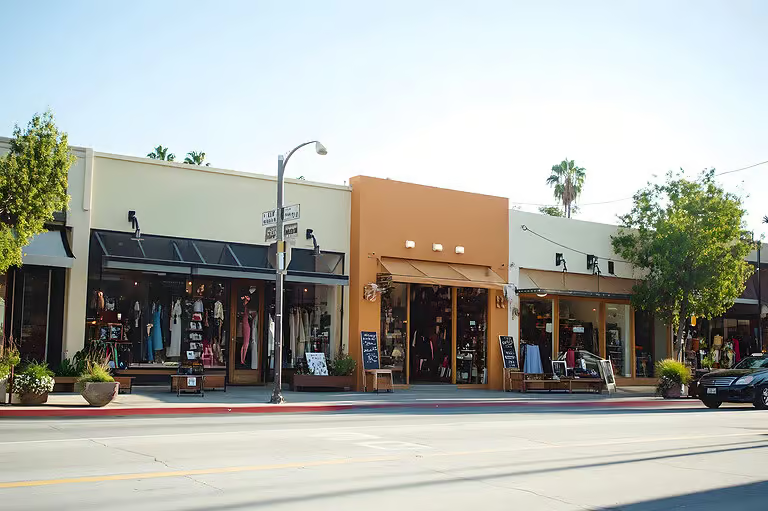

Your shop would look great here!
Promote your shop with Re:Source Roadmap, and we’ll put it in front of tons of people searching for experiences like yours
Get started