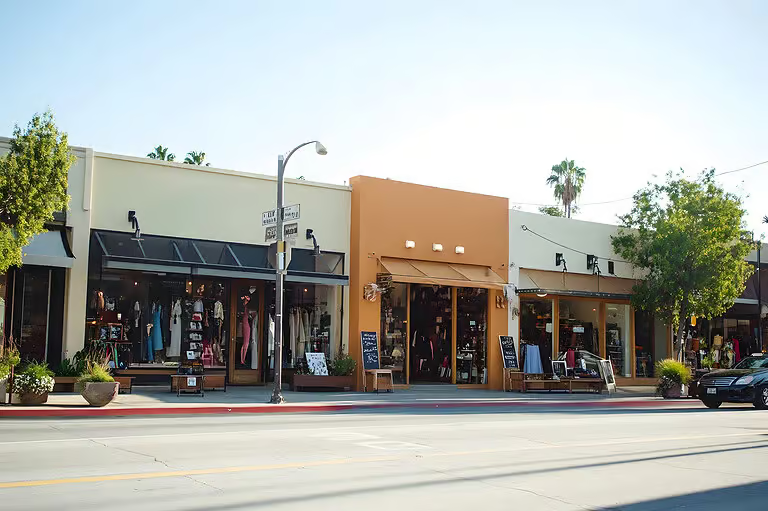


Shmata Thrift Store built its name on an idea most shoppers only encounter at a handful of North American retailers: clothing priced not by brand or condition but by weight. At the company’s Finch Avenue location in Toronto, customers fill provided bins with pre-loved garments pulled from long rolling racks, and everything in that bin checks out at a flat 5.99 dollars per pound. The format turns a routine errand into something closer to a treasure hunt, rewarding patient shoppers willing to dig through denim, knitwear, outerwear, and everyday basics for pieces worth carrying home. Alongside the bin-store model, Shmata also runs a more curated downtown Toronto location, where a tighter edit of secondhand pieces sits alongside a dedicated vintage section for shoppers who want a faster, more selective browsing experience without the digging.
Both formats share the same underlying philosophy. Shmata describes almost all of its inventory as repurposed, and the business frames its entire operation around reducing textile waste rather than simply moving discounted apparel. Every garment that finds a new owner through Shmata is one less item destined for landfill, and the pound based pricing at Finch Avenue in particular is designed to make secondhand shopping accessible at a scale that per-item pricing cannot match. For budget conscious Torontonians, families outfitting growing kids, or anyone building a wardrobe with sustainability in mind, the bins offer volume and value that traditional thrift racks rarely provide.
Shmata is Canadian owned and operates with an active presence across Instagram, TikTok, and Facebook, where the store posts new drop alerts, styling ideas pulled from its own racks, and behind the scenes looks at how incoming clothing gets sorted before it reaches the sales floor. Email subscribers receive exclusive deals and early notice of promotions, a nod to a shopper base that treats visits to Shmata as a recurring ritual rather than a one-off errand. The company’s name itself, a Yiddish word for a rag or a well-worn piece of clothing, signals the store’s unpretentious approach: clothes are meant to be worn, passed along, and worn again rather than discarded after a single season.
For anyone new to weight-based thrifting, the Finch Avenue store rewards a bit of strategy. Bringing your own reusable bag, checking labels for fiber content, and setting aside time to properly sort through a bin tend to yield the best results, since the format prioritizes volume over pre-curation. Shoppers looking for something more polished can head to the downtown location instead, where the vintage section in particular draws repeat visitors hunting for era-specific pieces that would be harder to spot amid a full bin. Together, the two formats let Shmata serve very different kinds of secondhand shoppers under one sustainability-minded banner.
Specific current hours are best confirmed directly with the store or through its website and social channels before visiting, since bin-store inventory and operating schedules can shift with donation volume. Shmata Thrift Store is a Toronto-based secondhand clothing retailer known for its pound-priced bin shopping model at its Finch Avenue location and a more curated vintage-forward selection downtown, both built around the idea that repurposing clothing is a practical, affordable way to shop more sustainably.