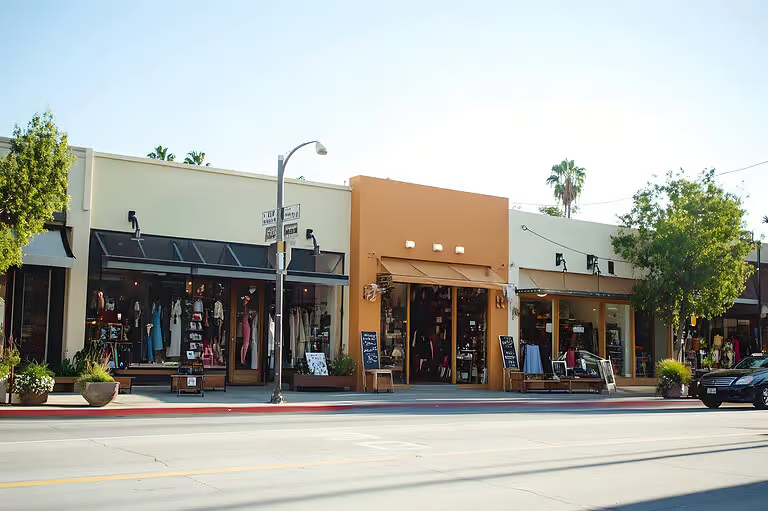


The name says it plainly: 1884 Market House traces its roots back to a year when Waynesboro’s first open-air farmers market opened on this same site, making today’s antiques and arts destination the direct descendant of a public marketplace that has now served this Franklin County borough for well over a century and a quarter. That kind of continuity is rare among Pennsylvania antique venues, most of which occupy buildings repurposed from some unrelated former use. Here, the commercial function itself, a gathering place where local sellers bring goods to local buyers, has simply evolved from produce and farm goods into antiques, art, and handmade work while staying rooted in the same address at 15 Schier’s Way.
Today that heritage plays out across 20,000 square feet spread over three floors, filled with offerings from local farmers, collectors, creators, and restorers alongside more traditional antique dealers. That mix sets 1884 Market House apart from a standard antique mall, since shoppers can move from vintage furniture and collectibles on one floor to work from local makers and restorers on another, all under one roof. The market house describes itself as the largest anchor building of Waynesboro’s Antiques and Arts District, a designation that reflects both its physical scale and its role in drawing shoppers to the surrounding cluster of antique-focused businesses nearby.
Open every day of the week from 10 am to 5 pm, 1884 Market House keeps a schedule friendly to both weekday browsers and weekend day-trippers, a notable convenience compared to many antique shops that close several days midweek. That daily availability, combined with the sheer size of the building, makes it realistic to spend a genuinely unhurried afternoon working through all three floors rather than the quick fifteen-minute pass typical of a small storefront shop. The market’s own description of the experience as a journey through time that might require a compass captures that scale honestly, since three floors of rotating vendor inventory rewards visitors willing to wander rather than beeline for a single section.
Waynesboro sits in the south central part of Pennsylvania near the Maryland border, and its Antiques and Arts District has become a modest but genuine draw for regional collectors looking for a denser concentration of dealers than a single standalone shop could offer. As the district’s largest anchor, 1884 Market House functions almost as a hub for that broader antiquing trip, the kind of stop visitors plan a full day around rather than a quick errand. The building’s mix of collectors, restorers, and local creators also means the inventory leans toward pieces with genuine local sourcing rather than goods trucked in from distant estate sales, giving shoppers a better sense of connection to the region’s own history.
Anyone planning a visit can reach the market house at (717) 387-5696 to ask about specific vendor booths, upcoming events, or seasonal changes to the floor plan, and the market also offers a newsletter for shoppers who want advance notice of giveaways and special sales. For collectors and casual browsers alike, 1884 Market House stands as Waynesboro’s largest and longest-running marketplace building, a three-floor antiques and arts destination whose 1884 name marks its direct lineage from the borough’s original farmers market to the sprawling multi-vendor marketplace shoppers walk through today.